Thursday, April 24, 2014

The Holocaust


Antisemitism began in Germany in 1933. 9 million Jews lived across European countries that would eventually be taken over by Germany. 6 million Jews died by 1945. That means 2 out of every 3 Jews perished from Nazi genocide.

Your task is to read about the Nazi rule, Jews in prewar Germany, the "Final Solution", Nazi concentration camps, and rescue from the camps. To do this, visit the official site of the United States Holocaust Memorial Museum at http://www.ushmm.org/outreach/en/

Answer all questions on a WORD DOCUMENT

1. Under the Nazi Rule section, read about why the Nazis also directed their hatred towards handicapped individuals, titled The Murder of the Handicapped. Summarize 5 key facts from this section.

2. Under the Jews in Prewar Germany section, read about the Nuremberg Laws, titled the Nuremberg Race Laws. Summarize 5 key facts from this section.

3. Explain what happened during the "Final Solution." Bullet point the process.

4. Read about the background to Auschwitz, the largest concentration camp established by the Germans. Explain the setting of the camp, daily life in the camp, impossible escapes, and longevity of prisoners.

5. The Soviet solders were the first to liberate Jews from the camps in 1944. Read about the liberation experience faced by the Allied soldiers, what they saw, and the reaction by the survivors. Summarize 5 key points.

6. Look at all 3 pages of photographs on the site. Choose the photograph that stands out to you the most. Identify the photograph and be sure to state your reasons why it "caught your eye."

7. View 3 testimonies of individuals who experienced the Holocaust. (you don't need to write anything for this)

8. Lastly, browse away from the Holocaust website to find other acts of genocide (look up this word if you don't know what it means). The term genocide didn't officially exist until the 1940's, so you may need to alter your search words to find examples pre-1940. Use any credible source to find your answer.

Thursday, March 20, 2014

Unit 9- WWI Test Guide


Honors American History
Unit 9- World War I Test Guide
Text- Ch. 19
Additional Resources
-       WWI map of Europe
-       Shell Shock video sheet

Content (Ch. 19)
-       Identify the 4 underlying causes of WWI
-       What was the immediate cause of the war? Explain how the network of alliances unfolded after the assassination. Be specific.
-       Identify the main countries of the Allies and Central Powers
-       Impact of trench warfare
-       Explain the role of American ethnic ties in the division of public opinion at the start of the war.
-       Define propaganda. Role?
-       Identify and explain the 3 causes that led America to join the war.
o   German unrestricted submarine warfare
§  Sussex Pledge
§  Lusitania
o   Zimmermann telegram
§  What was it?
§  What did Germany promise to Mexico?
o   Russian Revolution
§  Why did this make it easier for the U.S. to join the Allies side?
-       On what date did President Woodrow Wilson declare war? What was his reason?
-       What type of Americans opposed the war?
-       Identify the purpose of the Selective Service Act
-       Sedition and Espionage Acts
-       Identify the purpose of liberty bonds, rationing and daylight savings time
-       When did the armistice take place?
-       Significance of Schenk v. U.S
-       Over all death toll? U.S death toll? 1919 flu death toll?
-       What was the purpose of Wilson’s 14 points? Identify the 3 points from class notes
-       How did Wilson’s attitude toward punishing Germany differ from Britain, France and Italy? Define reparation
-       What was agreed upon in the Treaty of Versailles?
-       Why did the U.S Senate reject the League of Nations?
-       Role of Henry Cabot Lodge?
-       Legacy of WWI

Cultural Conflicts of the 1920s

The 1920's: A challenge of traditional roles, yet resisting change.

For your chosen topic, you must provide an overview followed by supporting points. Important: Be sure to address the over all 'so what' of your topic

Topics:
1. Fear of Communism- The Red Scare, Palmer Raids, Sacco and Vanzetti, limits on immigration
2. Prohibition- Speakeasies, Bootleggers, Al Capone and the rise of organized crime
3. Racism- Rise of the Ku Klux Klan, Marcus Garvey movement
4. Religion- Fundamentalism, Scopes Trial
Task:

- Create a mini powerpoint presentation, prezi or iMovie on your topic. You must research your topic first. Refer to chapter 20 in your textbook. The following links may also help...

Overview of the 1920s
The Red Scare
Prohibition
Race
The KKK
Sacco and Vanzetti
Immigration Restriction
The Scopes Trial

Each slide should contain information in bullet points and relevant pictures, maps, graphs, etc.
- Length: 5 slides (including a title slide)
- You will present your slides to the class. Be able to explain and elaborate in your presentation.

Value: 25 points

Monday, February 24, 2014

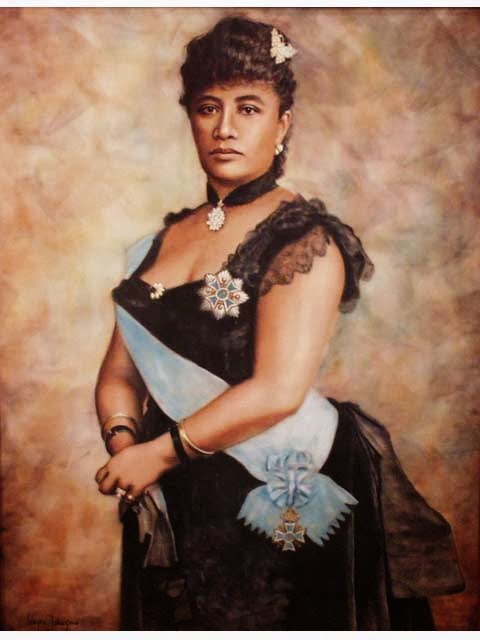
Hawaii's Last Queen

Length- 2 paragraphs
Format- MLA typed
Due: Wednesday, Feb. 26
Value: 12 points

After watching the film, "Hawaii's Last Queen," you should have a better understanding of imperialism and the motives that cause strong nations to overpower weaker nations. You saw Queen Liliuokalini's unsuccessful struggle to keep her Hawaiian people independent of foreign rule. You witnessed her faith in the American government as she gave up her throne with optimistic thoughts that her power would be restored in the near future. As we know, this was not the case. Hawaii was annexed as an American territory in 1898 and eventually became the 50th state in 1959.

In your reflection of the film, give a response with a summary (paragraph length) describing how Americans gained political and economic power in Hawaii. Be sure to include specific details about the missionaries, Queen Liliuokalini's childhood, foreign influences on Hawaiian culture, etc. Use your video question sheet and answers to help with this paragraph.

In addition, write a short paragraph on the way the story was portrayed through the Queen's perspective. You often heard excerpts from her diary that described her thoughts and feelings. Was this an effective way to tell the story? Do you think the program tried to persuade viewers to sympathize with the Hawaiian queen and people? Be specific in your argument.

Wednesday, February 19, 2014

The Annexation of Hawaii

Answer all questions in complete sentences on a word document in MLA format.

Value: 20 points

Read The Annexation of Hawaii and answer the questions below. 


1.     What happened on Jan 17, 1893?

2.     In what year did Hawaii become the 50th state? What percent of islanders supported statehood?

3.     What were several arguments of the businessmen who conspired to overthrow the queen?

4.     Who was Sanford Dole?

5.     Why did the joint resolution easily pass in Congress in 1900?

6.     What percent of the Hawaiian population is made up of natives?

7.     Why does Hawaii have one of the most diverse populations?

8.     What did President Bill Clinton do in 1993?


Read The 1897 PetitionAgainst the Annexation of Hawaii and answer the questions below.

1.     When did the first European set foot on Hawaii? Who was it?

2.     Identify several influences of European and American settlers in Hawaii.

3.     What reciprocity treaty did King Kalakaua sign with the U.S?

4.     What was the “Bayonet Constitution”?

5.     Who was James Blount? What did he discover?

6.     What other events caused U.S. leaders to lean towards annexation?


Tuesday, February 11, 2014

Unit 7: Migration and Industrialization Test


Unit 7: Migration and Industrialization (The Gilded Age)
Test Guide Ch. 13, 14, 15, 16


The New West:
-        Western stereotypes; why?
-        Push factors that forced people to move west
-        Pull factors that attracted people to move west
-        Frederick Jackson Turner’s Frontier Thesis
-        What is meant by American Exceptionalism
-        At what year is the frontier “closed”? Where does American look next?
-        Define assimilation
-        Purpose of the U.S. Indian Training and Industrial School
-        Dawes Act
-        Impact of the transcontinental railroad

Industrialization:
-        The Bessemer Process
-        Andrew Carnegie
-        John Rockefeller
-        Vertical Consolidation
-        Horizontal Consolidation
-        Social Darwinism and Gospel of Wealth
-        Robber Barons and Captains of Industry 
-        JP Morgan
-        Free Enterprise System
-        Sherman Anti-Trust Act
-        Arguments for and against big business
-        Labor Unrest
o   Knights of Labor- Terrence Powderly
o   American Federation of Labor- Samuel Gompers
o   Tools of workers and management
o   Haymarket riot

Politics of the Gilded Age
-        The Grant administration
-        Boss William Tweed
-        Supporters of Republicans and Democrats
-        Jim Crow Laws; Plessy v Ferguson
-        Gold vs Silver debate
-        William Jennings Bryan (Cross of Gold)
-        The Populist Party
-        William McKinley

Immigrants and Urbanization
-        Push factors
-        “Old” immigrants vs “New” immigrants
-        Acculturation
-        Ghettos
-        Nativists; Chinese Exclusion Act
-        Italian immigrants and Scandinavian immigrants
-        Tenements
-        Jacob Riis- How the Other Half Lives
-        Tragedy at Triangle Shirtwaist Factory

Monday, January 27, 2014

Unit 7- Gilded Age Inventions


Ch. 14, Section 1: The Expansion of Industry

The period following the Civil War was characterized by the significant growth of technology and inventions. Between 1790 and 1860, the government issued only 36,000 patents.  A patent is a license that gives an inventor the exclusive right to make, use, or sell an invention for a set period of time.  In contrast, between 1860 and 1890, the government issued 500,000 patents. Inventions such as the typewriter, telephone, and phonograph influenced changes in the economy, business practices, and the daily lives of Americans.  Thus, America experienced the “Gilded Age,” as termed by Mark Twain.  Gilded means “covered with a thin layer of gold,” and the term implied that the thin layer covered the poverty and corruption in the country.  However, the Gilded Age was a golden period for industrialists, and many Americans became rich as a result of booming industries.

Your task is to research one invention from the post-Civil War era (1860-1890).  Each student in the class will have a different invention as chosen at random.  Students will have various inventions chosen at random in class.  from your research in a well-developed paragraph.  Refer to credible sources from the internet to find the information. DO NOT plagiarize, as this will result in the grade of a zero. Paraphrase your work and make inferences.

1.     What is the invention? Identify who invented the product, the time frame (year) of the invention, and the progression of the idea/finished product. (at least 4 sentences)-  5 points
2.     Explain and analyze the IMPACT of the invention on the American economy as well as on the daily lives of Americans. Be as specific as specific as possible in your answer. (at least 5 sentences)- 7 points
3.     Compare the invention to a modern day product. (at least 3 sentences)- 3 points.

MLA format= 5 points
Total point value= 20 points

Due: Thursday, January 30th at the beginning of class.

Requirements: The paragraph must be typed in MLA format (include a proper header and title, font size 12, one-inch margins, proper spacing) You do not need to have a works cited page.